

As someone who’s spent the last decade leading businesses focused on data monetization, there’s one data product variation, specifically, I’m working with again — data aggregation.
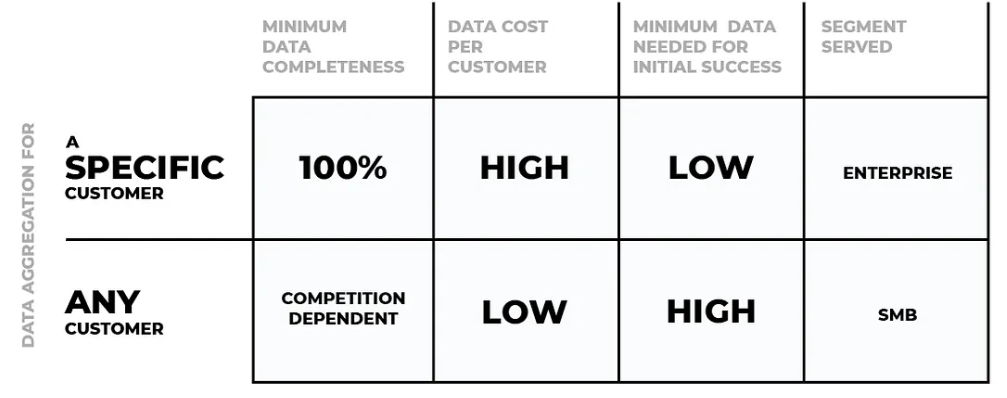
When considering launching a data product built using data aggregation, the most important consideration is: to build your product, are you aggregating data for a SPECIFIC CUSTOMER or for ANY CUSTOMER.
What’s the distinction?
To aggregate data for a SPECIFIC customer, you’re likely looking at custom sources of data, and as a result, customized data aggregation processes. The main driving force behind product strategy is data completeness. When collecting data for a specific customer, data completeness must achieve 100%. Businesses leveraging this product style exhibit aspects of consultancies — premium prices in a business that looks more like a service business than a product business.
To aggregate data for ANY customer, you’re looking at a product business. These businesses focus, most often, on aggregating large scale public data with the goal of having “enough” data for any customer that may start their service. Not surprisingly, aggregating data for ANY customer has a much higher hurdle to start, but as a product business, much higher long term organizational value.
The Data Aggregation Decision Matrix
Example Data Aggregation Platforms
Here are a few examples of data aggregation businesses for ANY customer: